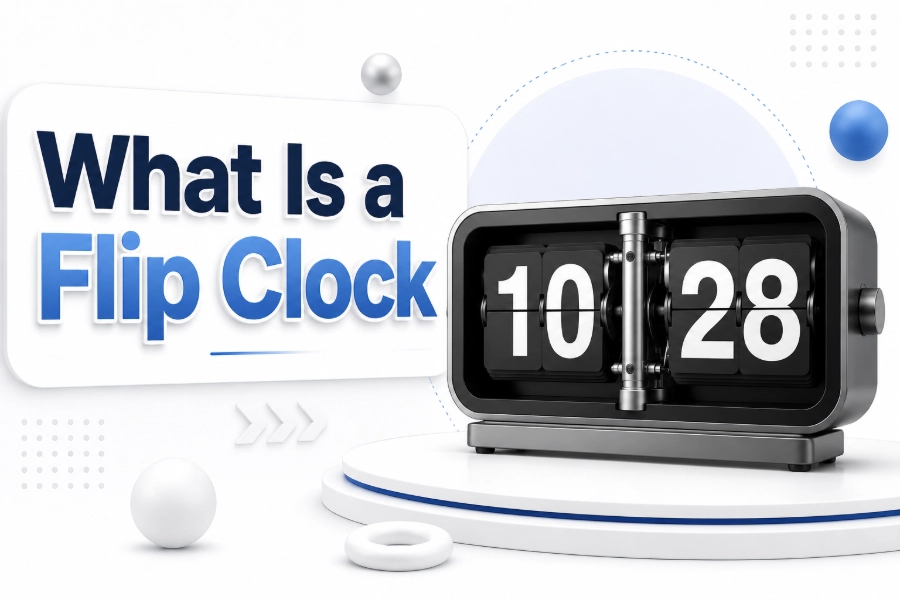
A flip clock is a unique type of timepiece that displays the current time using rotating number panels instead of traditional clock hands or electronic digits. Unlike standard analog and digital clocks, a flip clock creates a visual flipping motion whenever the time changes, making it both functional and decorative.
Many people search for what is a flip clock because these clocks have gained popularity again through retro designs, modern home décor trends, and minimalist desk accessories. Their mechanical movement and satisfying flipping sound give them a nostalgic appeal that many modern digital clocks cannot provide.
Although flip clocks were especially popular during the mid-20th century, they continue to attract attention today. Their combination of vintage style, simple operation, and eye-catching movement makes them a favorite choice for bedrooms, offices, and living spaces.
How a Flip Clock Works
A flip clock works by using a series of numbered cards or panels attached to rotating discs. Each panel displays a number that represents the time, such as hours or minutes. As time passes, the internal mechanism rotates these panels and flips them forward to show the updated time.
Most flip clocks divide time into separate sections for hours and minutes. For example, one set of panels displays the hour while another set displays the minutes. When the minute changes, the appropriate panel flips downward to reveal the new number.
The Mechanism Behind a Flip Clock
Inside a traditional flip clock, a small motor and gear system control the movement of the panels. The mechanism is designed to move at specific intervals, usually every minute.
Older flip clocks often used mechanical systems, while modern versions may combine electronic controls with traditional flipping panels. This allows manufacturers to create accurate clocks while maintaining the classic flipping effect.
The History of Flip Clocks
Flip clocks became widely popular during the 1960s and 1970s. They were commonly found in homes, offices, airports, and hotels because they provided a clear way to display time from a distance.
Before digital displays became common, flip clocks offered a modern alternative to traditional analog clocks. Their large numbers and automatic movement made them practical for public spaces where people needed to quickly check the time.
The Rise of Retro Flip Clocks
As technology advanced, electronic digital clocks replaced many flip clocks because they were cheaper to produce and easier to maintain. However, the unique design of flip clocks helped them remain popular among collectors and design enthusiasts.
Today, many people choose flip clocks because they add a vintage style to modern interiors. Their mechanical movement creates a sense of nostalgia while still serving a practical purpose.
Flip Clock vs Digital Clock
Although both flip clocks and digital clocks display time using numbers, their designs and experiences are very different. A digital clock uses an electronic screen to display numbers, while a flip clock uses physical panels that move when the time changes.
Digital clocks are usually more affordable and offer extra features such as alarms, calendars, and temperature displays. Flip clocks focus more on appearance, movement, and the experience of watching time change.
| Feature | Flip Clock | Digital Clock |
|---|---|---|
| Display Type | Rotating number panels | Electronic numbers |
| Movement | Mechanical flipping action | Digital display update |
| Style | Vintage and decorative | Modern and practical |
| Sound | Often produces flipping sound | Usually silent |
| Features | Basic time display | Multiple functions |
Advantages of a Flip Clock
Flip clocks offer several benefits that make them different from ordinary clocks. Their most noticeable advantage is their unique visual appeal. Watching the numbers flip creates an interesting experience that adds character to any room.
Unlike ordinary digital clocks, flip clocks can become part of interior decoration. Their retro appearance works well with modern minimalist spaces, vintage-themed rooms, and professional work areas.
Why People Like Flip Clocks
Some popular benefits include:
- Attractive retro design.
- Easy-to-read large numbers.
- Unique flipping movement.
- Decorative value.
- Simple time display.
Many users also enjoy the physical movement and sound of the flipping panels because it creates a more interactive way to experience time.
Types of Flip Clocks
Flip clocks are available in different designs depending on their purpose and style. Some models are small desktop clocks, while others are large wall-mounted displays designed for offices or public spaces.
Modern flip clocks may include additional features while keeping the traditional appearance. Some include alarms, battery operation, and automatic brightness adjustments.
Common Flip Clock Designs
Desk Flip Clocks:
These compact models are designed for tables, nightstands, and workspaces. They usually display hours and minutes in a simple format.
Wall Flip Clocks:
Large flip clocks are designed for visibility from a distance. They are often used as decorative pieces in homes, restaurants, and offices.
Retro Flip Clocks:
These designs recreate the appearance of vintage clocks from the 1960s and 1970s. They are popular among collectors and fans of classic design.
How Accurate Are Flip Clocks
The accuracy of a flip clock depends on its internal mechanism and quality. Modern flip clocks often use quartz technology, which helps maintain reliable timekeeping.
Mechanical flip clocks may require occasional adjustments because moving parts can experience wear over time. Proper maintenance helps keep the clock running smoothly.
Maintaining a Flip Clock
To keep a flip clock working properly:
- Replace batteries when needed.
- Keep the mechanism free from dust.
- Avoid placing it near extreme temperatures.
- Handle the panels carefully.
- Follow manufacturer maintenance instructions.
Regular care can extend the lifespan of a flip clock and keep its flipping movement working correctly.
Why Flip Clocks Are Popular Again
Despite the availability of advanced smart devices, flip clocks have experienced renewed interest. Many people appreciate objects that combine function with design, and flip clocks provide a unique alternative to ordinary time displays.
The growing popularity of vintage-inspired home décor has also contributed to their comeback. A flip clock can serve as both a useful device and a conversation piece.
Flip Clocks in Modern Interior Design
Interior designers often use flip clocks as statement pieces because they add personality to a room. Their clean numbers and mechanical movement create a balance between technology and traditional craftsmanship.
They are commonly placed in:
- Home offices.
- Bedrooms.
- Living rooms.
- Creative workspaces.
- Reception areas.
Common Problems With Flip Clocks
Like any mechanical device, flip clocks can experience problems over time. The most common issues involve the flipping mechanism, power supply, or alignment of the number panels.
A clock may stop flipping correctly if gears become worn or if the internal motor has a problem. Dust buildup can also affect smooth movement.
Troubleshooting Flip Clock Issues
If your flip clock is not working properly:
- Check the battery or power connection.
- Reset the clock.
- Remove dust from moving parts.
- Check for stuck panels.
- Refer to the manufacturer’s instructions.
Some problems can be fixed easily, while others may require professional repair.
Flip Clock Buying Tips
Choosing the right flip clock depends on your preferences and intended use. Some people want a decorative vintage piece, while others need a practical everyday clock.
Before purchasing, consider the clock size, power source, build quality, and available features.
Things to consider:
- Display size.
- Battery life.
- Material quality.
- Noise level.
- Design style.
- Maintenance requirements.
A well-made flip clock can last for years and provide both accurate timekeeping and visual appeal.
Conclusion
A flip clock is more than just a device for telling time. Its rotating number panels, mechanical movement, and vintage appearance make it a unique alternative to traditional analog and digital clocks.
For those who appreciate classic designs and interactive objects, flip clocks offer something different from ordinary timepieces. They combine practical function with decorative style, making them popular in homes, offices, and creative spaces.
If you are wondering what is a flip clock, it is a timepiece that displays hours and minutes through moving panels that physically flip as time changes. This simple yet fascinating design continues to attract people who enjoy a blend of nostalgia, craftsmanship, and modern style.
FAQ
Are flip clocks still made today?
Yes, modern flip clocks are still available. Many manufacturers create updated versions with improved accuracy, durable materials, and designs inspired by classic models.
Do flip clocks make noise?
Many flip clocks produce a soft flipping sound when the panels change. Some people enjoy this mechanical sound, while quieter models are available for bedrooms.
Are flip clocks accurate?
Most modern flip clocks are accurate because they use quartz technology. Older mechanical models may require occasional adjustment to maintain correct time.
How long do flip clocks last?
A well-maintained flip clock can last many years. The lifespan depends on the quality of the mechanism, materials, and how regularly it is maintained.
Can a flip clock be used as a decoration?
Yes, flip clocks are often used as decorative items because their retro appearance adds character to homes, offices, and modern interior spaces.
0 Comments