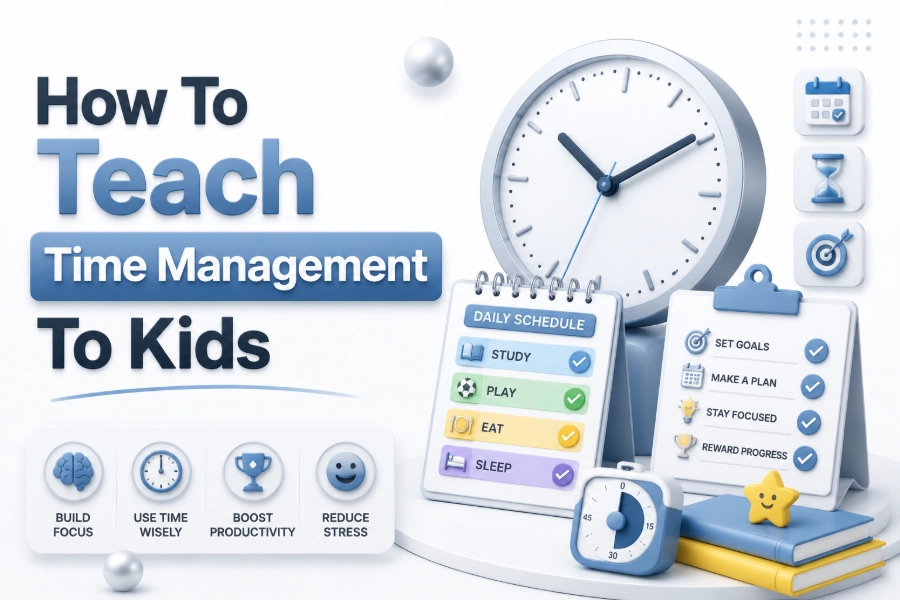
Time management is an important life skill that helps children organize their responsibilities, complete tasks, and develop independence. Many kids struggle with understanding how to use their time properly because they are still learning how to plan, prioritize, and stay focused. This is why many parents and teachers look for ways on how to teach time management to kids in a simple and effective way.
Children do not naturally understand deadlines, schedules, or the importance of planning ahead. These skills need to be introduced through daily routines, examples, and consistent practice. When kids learn time management early, they become more confident in handling homework, chores, hobbies, and personal goals.
Teaching children about time does not require complicated methods. Small activities like creating schedules, using timers, setting goals, and encouraging responsibility can help them develop habits that support success in school and everyday life.
Start With Teaching the Concept of Time
Before children can manage time, they need to understand what time means. Young kids often find it difficult to understand how long activities take or why certain tasks need to be completed at specific moments.
Parents and teachers can introduce time concepts through everyday activities. Simple examples, such as explaining that breakfast happens before school or bedtime comes after evening activities, help children connect time with real-life routines.
Use Everyday Examples to Explain Time
Children learn better when lessons are connected to situations they already understand. Instead of only explaining hours and minutes, show them how time affects their daily activities.
Examples include:
- “You have 20 minutes to finish your homework.”
- “We leave for school at 8:00 AM.”
- “You can play after your reading time.”
These examples help children see time as something they can plan and control.
Create a Daily Routine for Kids
A consistent routine is one of the easiest ways to introduce time management. When children follow a predictable schedule, they learn what activities need to happen and when they should happen.
A daily routine reduces confusion and helps kids become more independent. Over time, children begin completing tasks without constant reminders because they know what comes next.
Include Important Daily Activities
A child-friendly schedule may include:
| Time | Activity |
|---|---|
| Morning | Wake up, get ready, eat breakfast |
| Afternoon | Schoolwork, homework, hobbies |
| Evening | Family time, preparation for tomorrow |
| Night | Reading and bedtime routine |
The goal is not to create a strict schedule but to help children understand how to organize their day.
Teach Kids How to Make To-Do Lists
To-do lists are simple tools that can help children understand priorities. Writing down tasks makes responsibilities clearer and gives kids a sense of achievement when they complete each item.
Start with short lists that match the child’s age. Younger children may need pictures or symbols, while older children can write their own tasks.
Make Lists Fun and Easy to Follow
Encourage children to include tasks such as:
- Complete homework.
- Pack school supplies.
- Clean their room.
- Practice a skill.
- Prepare clothes for the next day.
Checking off completed tasks helps children feel motivated and teaches them the value of finishing responsibilities.
Teach Kids to Prioritize Tasks
Children often want to do the most enjoyable activities first, such as playing games or watching videos. Teaching them how to identify important tasks helps them make better choices.
Explain that some activities need to happen before others. For example, homework may need to be completed before screen time.
Use Simple Priority Categories
A helpful method is to divide tasks into:
Must Do: Important responsibilities that need attention first.
Should Do: Tasks that are helpful but less urgent.
Can Do Later: Activities that can wait until free time.
This approach teaches children how to make decisions about their time.
Use Timers to Build Time Awareness
Many children struggle with estimating how long tasks take. A timer can make time easier to understand by showing children how much time they have available.
Timers can be especially helpful for homework, cleaning, reading, and getting ready for school.
Try Fun Time Management Activities
Parents can use activities like:
- Setting a 10-minute cleaning challenge.
- Timing how long it takes to complete homework.
- Using countdowns before transitions.
- Creating short focus sessions.
These activities turn time management practice into a positive experience.
Teach Kids to Break Big Tasks Into Smaller Steps
Large tasks can feel overwhelming for children. When they see a big assignment or project, they may avoid starting because they do not know where to begin.
Teaching kids to divide tasks into smaller steps makes responsibilities easier to manage.
Example of Breaking Down Tasks
Instead of saying:
“Finish your science project.”
Break it into steps:
- Choose a topic.
- Collect information.
- Create materials.
- Complete the project.
- Review the final work.
Small steps help children stay organized and build confidence.
Encourage Kids to Set Goals
Goal setting teaches children how to plan for the future. Whether the goal is improving grades, learning a skill, or completing a personal challenge, goals give children a reason to manage their time.
Parents can help children create realistic goals and identify the steps needed to reach them.
Make Goals Specific and Achievable
A good goal should be clear and measurable.
Examples:
- Read one book this month.
- Practice piano for 15 minutes each day.
- Finish homework before dinner.
Achieving small goals encourages children to continue developing positive habits.
Teach the Importance of Avoiding Distractions
Children today face many distractions, including video games, smartphones, television, and online content. Learning how to manage distractions is an important part of time management.
Instead of simply removing distractions, teach children how to create boundaries and make responsible choices.
Create Focus-Friendly Environments
Helpful strategies include:
- Keeping devices away during homework.
- Creating a quiet study area.
- Setting specific screen-time limits.
- Encouraging breaks between activities.
These habits help children learn how to protect their attention.
Be a Good Time Management Example
Children often learn more from watching adults than from listening to instructions. Parents and teachers who manage their own time effectively provide a strong example.
Showing children how you plan your day, organize tasks, and prepare ahead helps them understand that time management is a practical skill.
Demonstrate Healthy Habits
Adults can model behaviors such as:
- Using calendars.
- Preparing for tomorrow in advance.
- Completing tasks before deadlines.
- Taking breaks when needed.
Children are more likely to copy habits they regularly see.
Avoid Making Time Management Too Strict
While routines are helpful, children also need flexibility. A schedule that is too strict can make time management feel like a punishment rather than a useful skill.
The goal is to teach children how to make good choices, not to control every minute of their day.
Allow Room for Fun and Creativity
A balanced schedule should include:
- Learning activities.
- Responsibilities.
- Playtime.
- Rest.
- Family activities.
Children learn better when they have time to relax and enjoy themselves.
Reward Progress and Effort
Positive encouragement helps children stay motivated while developing time management skills. Rewards do not always need to be material; simple recognition can be very effective.
Praising effort shows children that improvement matters more than perfection.
Positive Ways to Encourage Kids
You can:
- Celebrate completed tasks.
- Praise good planning.
- Create achievement charts.
- Offer extra playtime as a reward.
Positive reinforcement makes time management a more enjoyable learning process.
Common Mistakes When Teaching Time Management to Kids
Teaching time management requires patience. Some approaches may create frustration instead of helping children learn.
Parents should focus on guidance rather than expecting children to master these skills immediately.
Common mistakes include:
- Creating schedules without involving kids.
- Expecting perfect organization.
- Giving too many tasks at once.
- Using punishment instead of encouragement.
- Ignoring the child’s age and abilities.
Adjusting expectations based on a child’s development makes learning easier.
Benefits of Teaching Time Management Early
Learning time management during childhood provides benefits that continue into adulthood. Children who develop these skills often become more responsible and independent.
Key benefits include:
- Better school performance.
- Reduced stress.
- Improved focus.
- Greater independence.
- Stronger decision-making skills.
- Better organization.
These habits can support children throughout their education and future careers.
Conclusion
Teaching children how to manage time is a gradual process that requires practice, encouragement, and patience. By creating routines, using simple tools, setting goals, and providing positive examples, parents and teachers can help children develop valuable skills.
Learning how to teach time management to kids is not about making children follow a strict schedule. It is about helping them understand priorities, make responsible choices, and feel confident managing their own responsibilities.
When children learn these habits early, they gain skills that can improve their academic success, personal growth, and ability to handle challenges in the future.
FAQ
What is the best age to teach kids time management?
Children can start learning basic time management skills as early as preschool. Simple routines, schedules, and task organization can be introduced gradually based on their age.
How can parents help kids manage their time?
Parents can help by creating routines, teaching prioritization, using timers, encouraging goal setting, and showing good time management habits through their own actions.
Why is time management important for children?
Time management helps children become more organized, responsible, focused, and independent. It also prepares them for academic and personal challenges.
How can I make time management fun for kids?
Parents can make it fun through games, reward charts, challenges, colorful schedules, and activities that allow children to practice planning.
Should kids have a strict daily schedule?
Kids benefit from routines, but schedules should remain flexible. A balanced routine with time for learning, play, and rest is more effective than a strict schedule.
0 Comments